
White Horse, Hollow Bone
Aug 19, 2026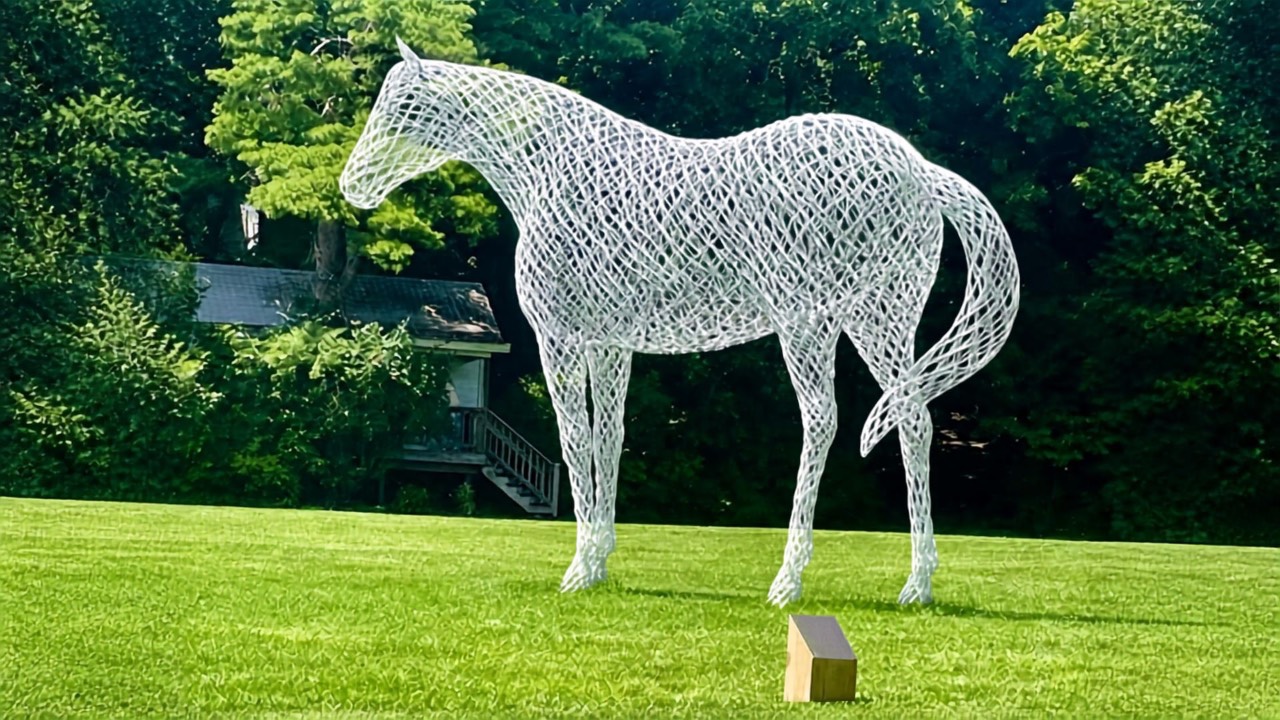
I was captivated by a new sculpture at the Omega Institute during my visit a few weeks ago. White Horse, by Peter Busby, is on loan for the 2026 season to commemorate the Chinese Year of the Fire Horse.
The Fire Horse is traditionally associated with power, movement, and vitality. Yet what struck me most about this particular horse was its stillness, and the space inside it.
White Horse stands 12 feet tall on the far side of a large field. Its exterior is made of galvanized steel rods enclosing empty space. The structure was as solid as steel can be, yet it was the emptiness inside that was so compelling.
As I meditated on a nearby bench, I had the sense that I was a bit like that horse. My body remained stable and unmoving while my inner being felt spacious and free.
In a sense, White Horse represents the journey we take in yoga — loosening our identification with the contracted, egoic sense of self, and moving toward the innate freedom yoga invites us to explore.
We often describe yoga as a process of stilling the mind, of moving beyond habitual patterns and concepts to touch a vaster, unchanging essence. As the mind becomes quieter, we can begin to perceive a clarity and lightness that lies beneath the surface activity of ordinary thought.
In the yogic tradition, this clear, spacious quality of mind is associated with buddhi. This is our refined intellect, our capacity for discernment, intuition, and inner knowing. When we touch this deeper dimension of mind, we can experience more space around our preferences, proclivities, patterns, and the stories that usually define us.
Like White Horse, the experience of inner quietude can feel like emptiness. But that isn’t to say it’s nothingness. In that spacious silence, our usual patterns of mind can temporarily soften, and we can glimpse a sense of the vastness within.
This feels particularly meaningful because most of us are so accustomed to filling ourselves up — with thoughts, opinions, plans, accomplishments, even spiritual striving.
What if, instead, our practice was about making space?
Our bodies are forms. On a more subtle level, so are our personalities, our histories, our relationships, and our particular ways of moving through the world. Yoga doesn't ask us to erase these things or become empty of personality or preferences. The forms remain. What changes is our relationship to them. Through asana, breath and meditation, we become available for the luminosity of spirit to move through us and out into the world.
The image reminds me of the “hollow bone,” a metaphor used in some shamanic traditions for becoming a clear vessel through which spirit can move.
Since returning from Omega, I’ve continued to invite the image of White Horse into my meditation. I love the paradox it holds of structure and openness, stability and freedom, form and space.
The other day, I carried that image with me on a walk through a crowded park. I felt lighter and more present. I noticed families gathering for picnics, a young woman studying in the grass, a group of young people playing a game. Nothing extraordinary was happening. And yet, from that place of inner spaciousness, I felt more loving, open, content, joyful, even hopeful. I was more available to appreciate the life around me.
Perhaps this is the deeper invitation of yoga: not to transcend the forms that make us who we are, but, like White Horse, to be both grounded and open, strong and spacious — to inhabit our forms with enough freedom that something greater than ourselves can shine through.