
Another Overview
Apr 15, 2026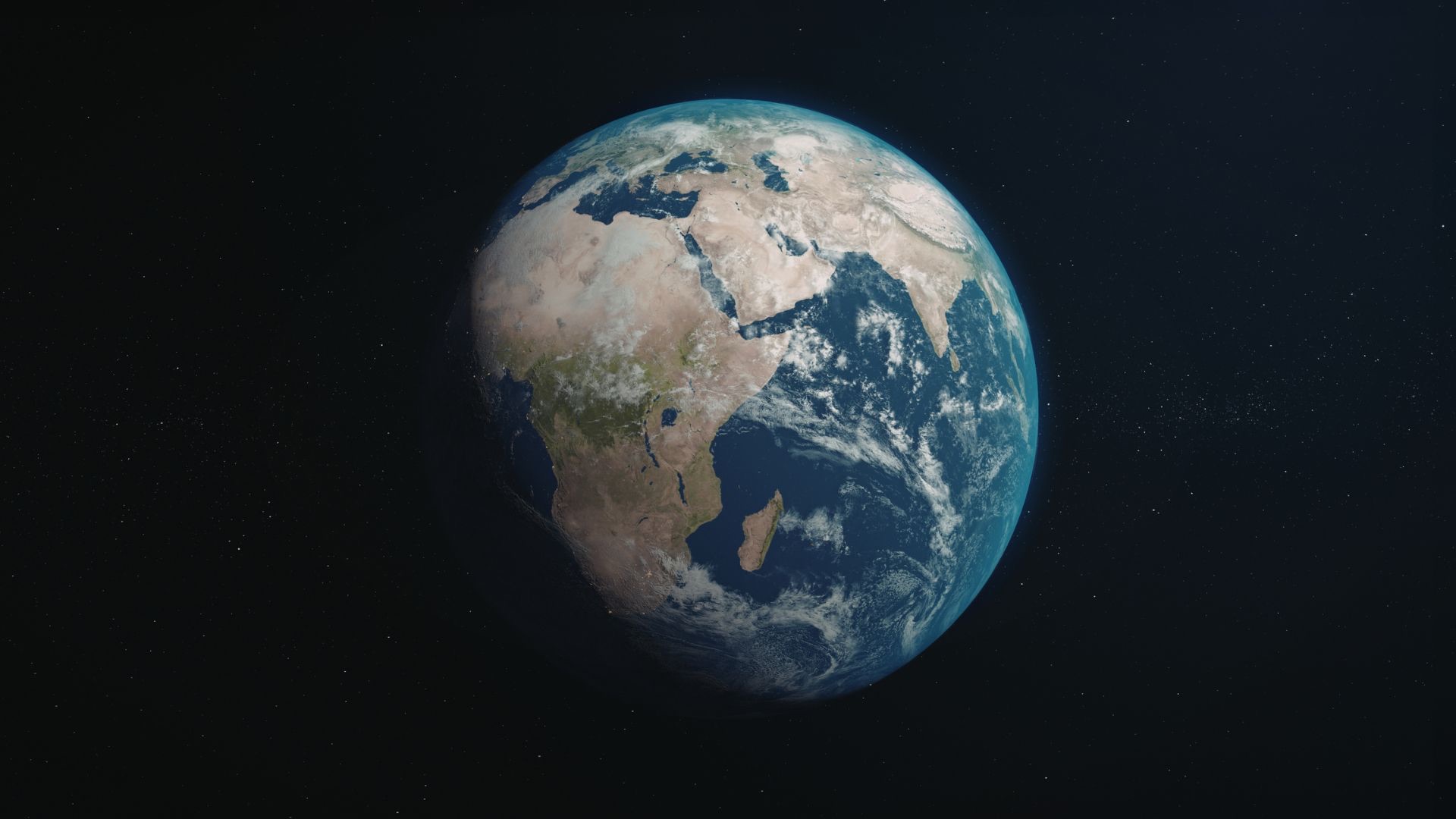
For many of us, the recent Artemis II mission rekindled the power of the “overview effect” – the profound cognitive shift that many astronauts experience when seeing Earth from space for the first time. It’s often described as a sudden, visceral recognition of our planet's fragility and beauty, a dissolving of borders and divisions, and an overwhelming sense of connection to all of humanity. As astronaut Christina Koch said:
You don’t see borders, you don’t see religious lines, you don’t see political boundaries. All you see is Earth and you see that we are way more alike than we are different.
I suspect I’m not the only one who teared up hearing these accounts. They speak to the tender vulnerability of our existence and the vastness of the cosmos we inhabit. Yet, they also carry a stinging poignancy: that a species capable of such beauty and wonder is also tearing itself, and its home planet, apart.
Astronaut Edgar Mitchell famously described his own such moment on the journey back from the moon in 1971 as an “explosion of awareness” — an overwhelming sense of oneness and interconnectedness, accompanied by profound ecstasy.
Sounds a little like deep meditation, doesn't it?
Mitchell himself later identified his experience as resembling savikalpa samadhi, a yogic state in which one perceives the separateness of all things while simultaneously recognizing that this separateness is an illusion.
The parallels between the overview effect and meditative states are striking. Both involve a shift from ordinary, limited perception into something vaster and more expansive. Both have the potential to change not only how we see the world but how we live within it.
Yet if these glimpses of our underlying unity are so powerful, why don’t they last?
Neuroscience offers one lens. The brain continuously filters reality, allowing us to perceive only a fraction of what is actually happening at any given moment. Our senses are inherently constrained — our eyes see only a narrow band of the light spectrum, our ears hear only a limited range of frequencies. This narrowing isn’t a flaw; it’s what allows us to focus and function as distinct individuals. We are, by design, limited.
The nondual teachings of Kashmir Shaivism say something remarkably similar: consciousness is infinite and unbounded in its essential nature, yet contracts itself to make our human experience possible. Contraction isn't a mistake — it's just not the whole story.
Fortunately, we don’t need a spaceship to access a more expanded view.
In meditation, we can experience our own version of the overview effect —a shift into a more spacious awareness. Like an astronaut floating free of gravity, we step outside the frame of ordinary perception to glimpse ourselves and our lives from a broader vantage point
This is why yogis could speak of the sun, moon, and stars existing within the human being. In deep meditation, they experienced the truth of our fundamental oneness — not as an abstract concept, but as a living reality. Their words are not merely poetic metaphors, but descriptions of their direct experience of reality in which “inner” and “outer” are no longer separate.
Like astronauts returning to Earth, we re-enter daily life with its responsibilities, its tensions, and its complexities. But we carry something back: the residue of spaciousness, a wider lens through which to meet ourselves and our circumstances.
Rather than trying to hold onto these expansive states, we can allow them to gradually reshape how we inhabit our daily lives — in a difficult conversation, in a moment of overwhelm, in how we choose to respond to a fractured world.
Our capacity for self-reflective awareness lets us hold this paradox at the heart of human experience: that we are at once both limited and vast, ordinary and extraordinary. The overview isn’t only something glimpsed from space — it’s a perspective we can learn to recognize, return to, and live from.
Even here. Even now.
P.S. These are the themes Dr. Marjorie Woollacott and I will be exploring in The Mind of a Meditator. Starting tonight, we’ll dive into the fascinating intersections of neuroscience and the nondual wisdom of Kashmir Shaivism to learn how to bring the expanded, joyful state of meditation into daily life. We’d love to have you with us. Learn more and sign up here.